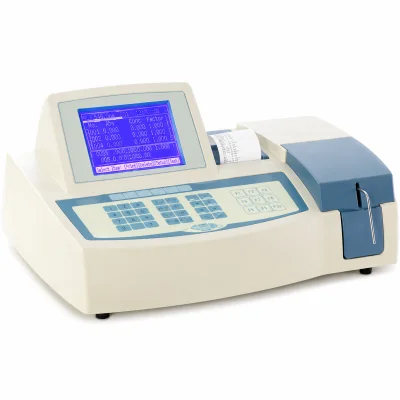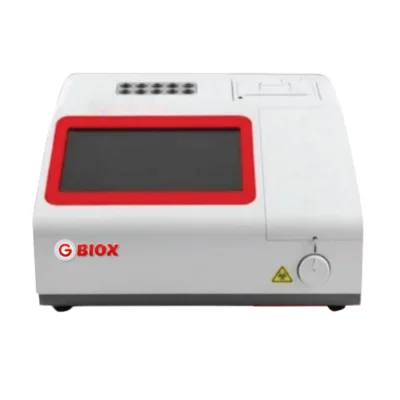


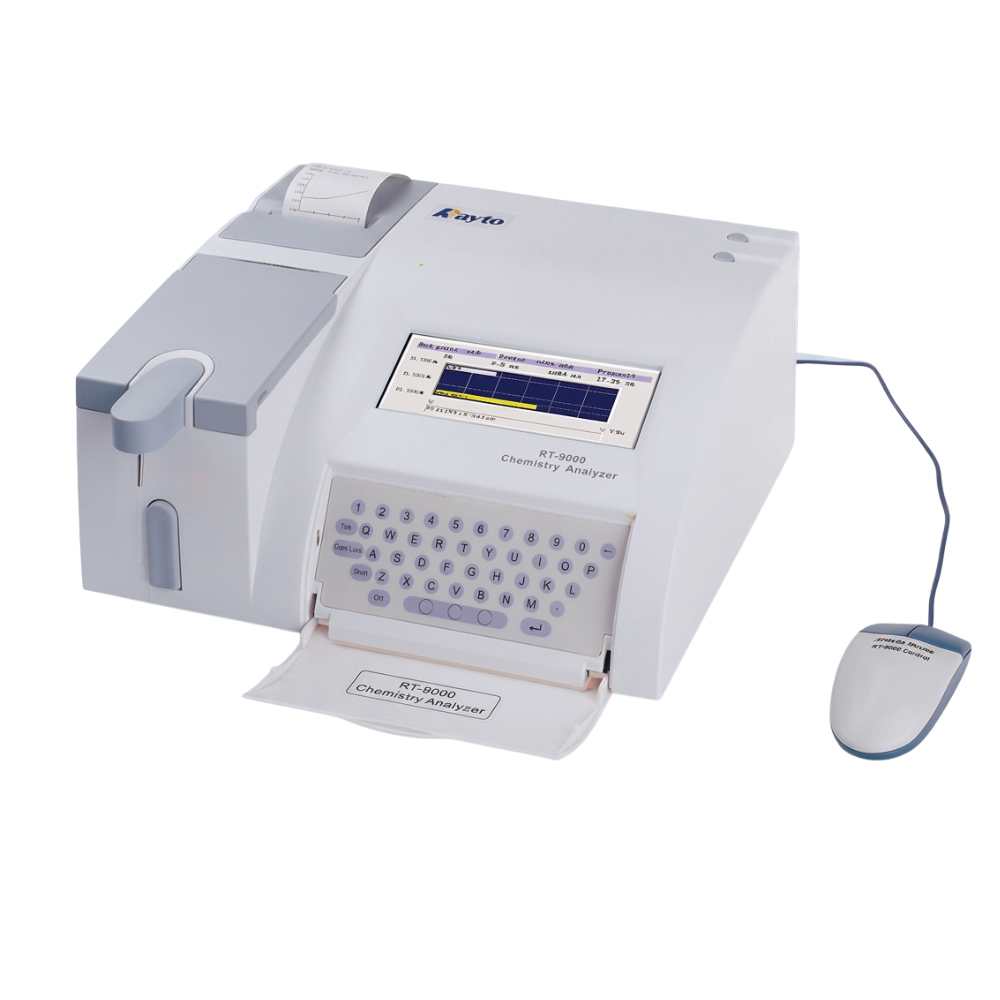
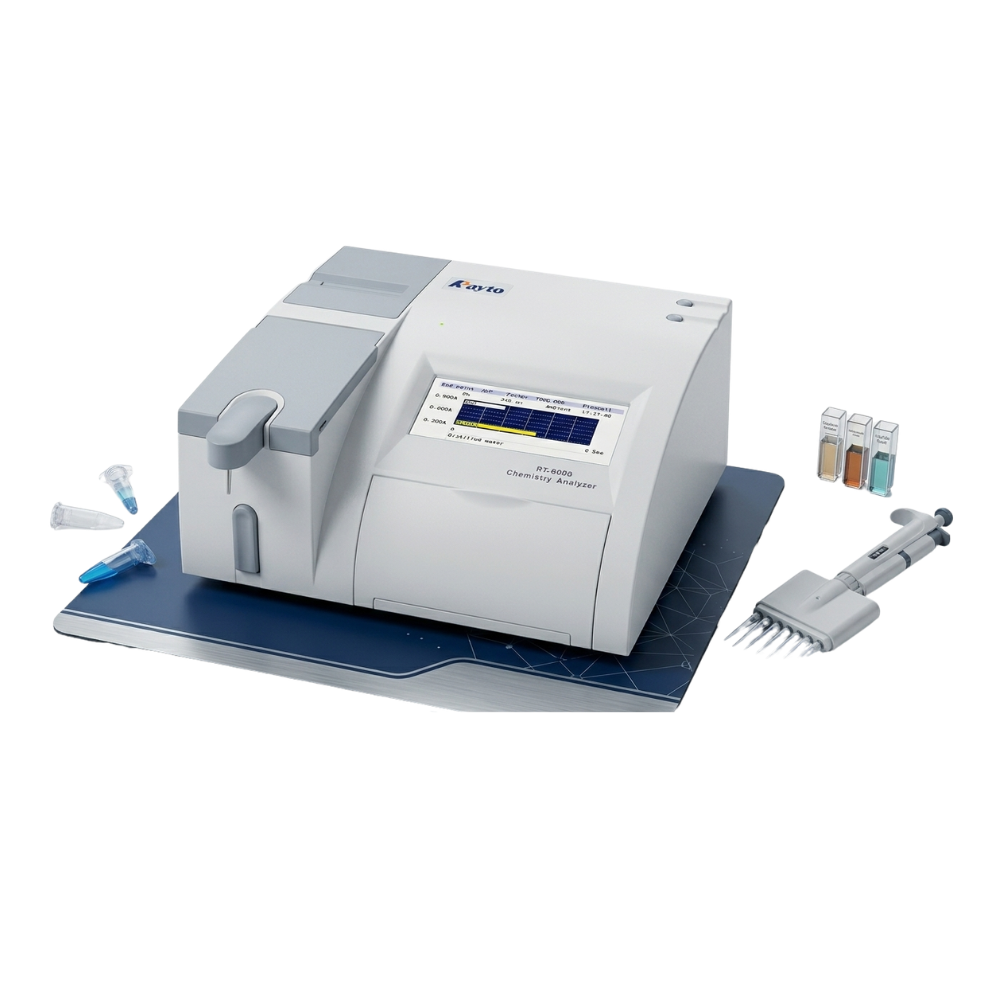
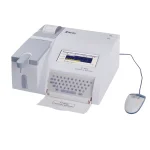
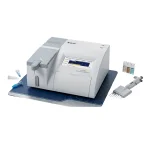
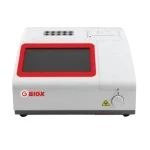
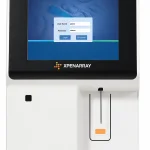

Semi-auto Chemistry Analyzer
Unlike fully automated systems that handle pipetting and sample loading, a semi-auto analyzer requires a technician to manually prepare the sample and aspirate it into the system. The device then takes over to perform the photometric analysis, calculation, and data display.
Key Components & Technology
-
Optical System: Typically uses high-quality interference filters or a diffraction grating to isolate specific wavelengths.
-
Flow Cell System: A specialized chamber (usually 30–32 $\mu L$) that minimizes cross-contamination and reagent waste.
-
Incubation Block: Built-in temperature control (usually 25°C, 30°C, or 37°C) to ensure enzyme reactions occur at optimal rates.
Core Functionalities
These analyzers are designed to measure a wide range of analytes in serum, plasma, urine, or cerebrospinal fluid (CSF).
1. Measurement Modes
-
Absorbance: Direct reading of light intensity.
-
End-Point: Measurement after the reaction has reached completion.
-
Kinetic: Measuring the rate of reaction over time (common for enzymes).
-
Fixed Time: Measuring the change in absorbance over a specific interval.
-
Multi-standard: Calibration against multiple known concentrations.
2. Common Test Menu
-
Liver Function: ALT, AST, ALP, Bilirubin, Albumin.
-
Kidney Function: Urea, Creatinine, Uric Acid.
-
Lipid Profile: Cholesterol, Triglycerides, HDL, LDL.
-
Cardiac Markers: CK-MB, LDH.
-
Diabetic Markers: Glucose, HbA1c (via specialized assays).
Advantages for the Laboratory
-
Cost-Efficiency: Significantly lower purchase price and maintenance costs compared to fully automated units.
-
Low Reagent Consumption: The flow cell design requires minimal volume (often as low as 300 $\mu L$ to 500 $\mu L$ per test).
-
User-Friendly Interface: Modern units feature large color touchscreens and intuitive software for easy programming of new assays.
-
Reliability: Fewer moving parts means less mechanical downtime and easier troubleshooting.
Technical Specifications (Typical)
| Feature | Standard Specification |
| Wavelength Range | 340nm to 670nm (usually 7-8 filters) |
| Photometric Range | 0.000 to 3.000 Abs |
| Light Source | Halogen Tungsten lamp (or long-life LED) |
| Display | 7″ Color Touchscreen / LCD |
| Memory | Storage for 100+ programs and 10,000+ test results |
| Connectivity | RS232 or USB for PC and external printer |
## Ideal For:
-
Small Diagnostic Centers: Primary testing for low-to-medium sample volumes.
-
Emergency Rooms: Rapid turnaround for critical “Stat” tests.
-
Research & Education: Teaching biochemistry principles in universities.
-
Back-up Systems: A reliable secondary unit for large labs in case of primary analyzer failure.